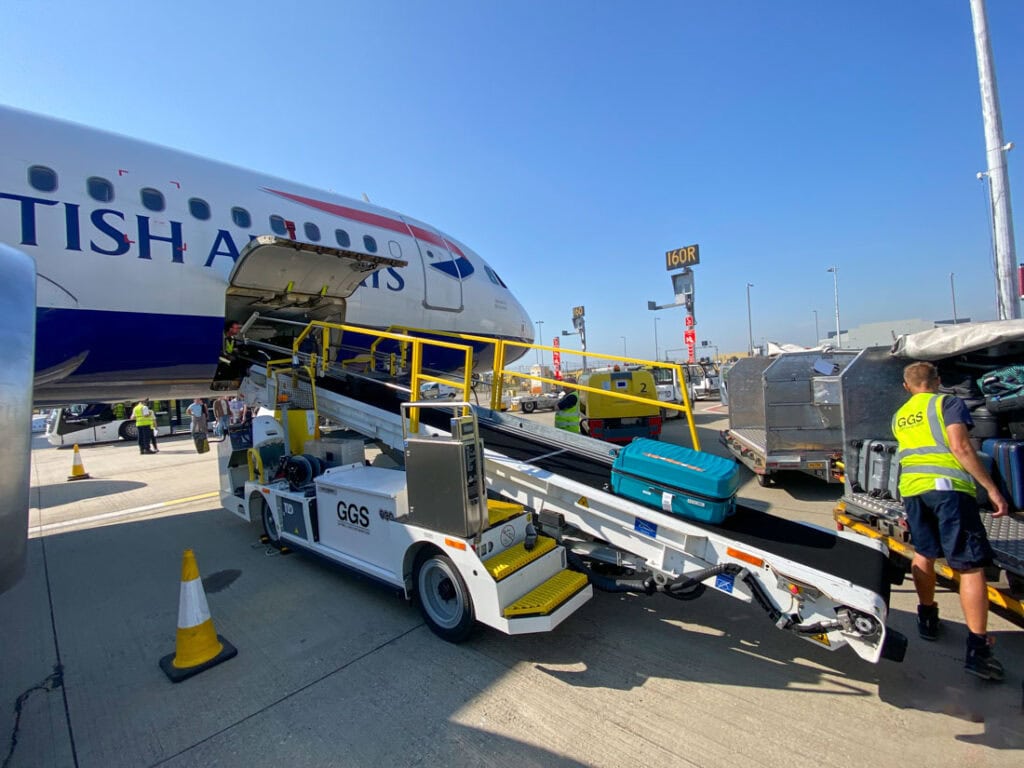
GGS streamlines baggage handling with Power Stow´s extendable belt loaders
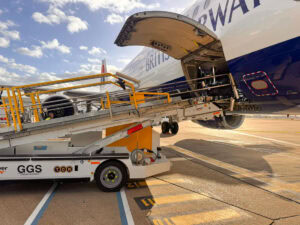
Gatwick Ground Services (GGS) is a wholly owned subsidiary of British Airways (part of the IAG Group) providing a full range of turnaround and ground handling services at London Gatwick Airport. This includes front of house, gate, ramp, baggage handling and aircraft cleaning. The GGS team supports the operations of British Airways, Iberia Express, Vueling and various long-haul airlines, handling over 50,000 aircraft movements per year.
In 2022, British Airways launched a new subsidiary, BA Euroflyer, with its primary hub at London Gatwick Airport. The airline focuses on short-haul flights within Europe and to selected destinations in North Africa, operating aircraft from the Airbus A320 and A321 family. The aircraft fleet allocated to the new Gatwick operation were originally containerised. However, the airline decided to convert them to a bulk loaded configuration to improve fuel efficiency, reduce overall aircraft weight, and address the lack of containerised handling capacity at some of the destinations they serve. As these A320 and A321 aircraft were converted to bulk loaded operations and typically carrying high volumes of baggage due to the airline’s focus on the leisure travel market, the Rollertrack Conveyor system is particularly well-suited to their operational requirements.
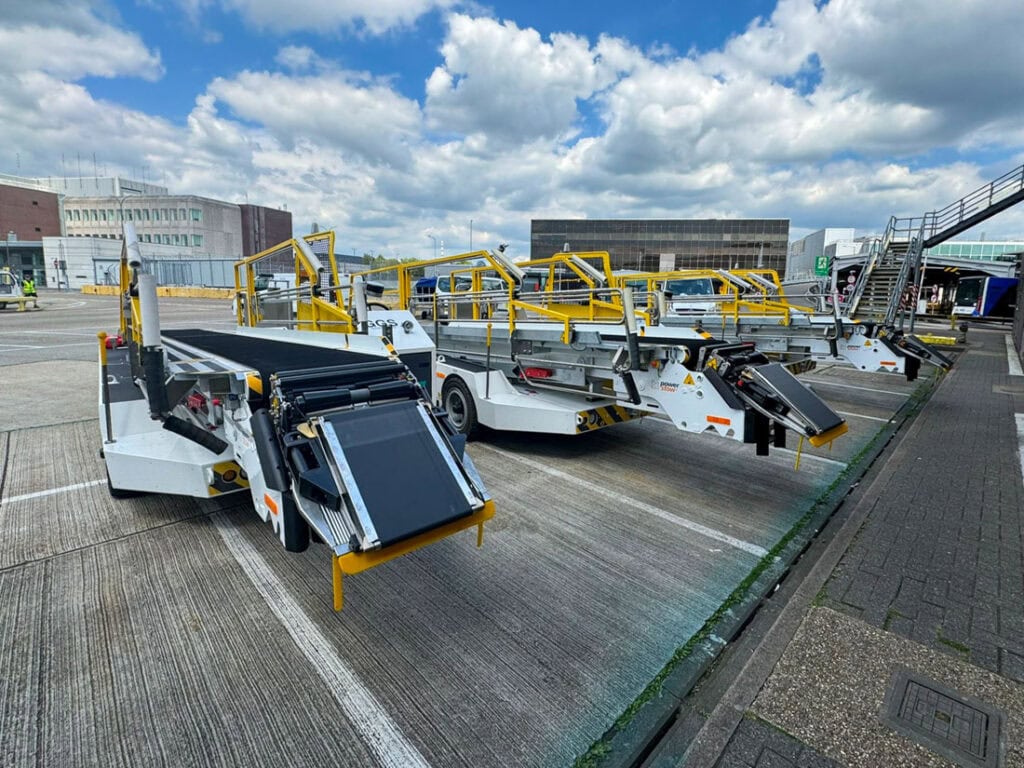
With this development, alongside the short-haul operations of Vueling and Iberia Express, the timing was ideal for GGS to introduce Power Stow’s extendable belt loader technology last year. Today, eight Rollertracks support GGS’s ground handling operations, helping to reduce manual baggage handling, improve safety, optimise turnarounds and resource efficiency.
Mark Gower, Managing Director at Gatwick Ground Services, says:
“We do see quite high baggage loads and therefore looking at utilising Power Stows was the perfect solution. The two main features, the reduction in manual handling and improved safety being probably the biggest driver. Followed closely by resource efficiencies on the actual turnaround.”
Improving working conditions for ramp agents
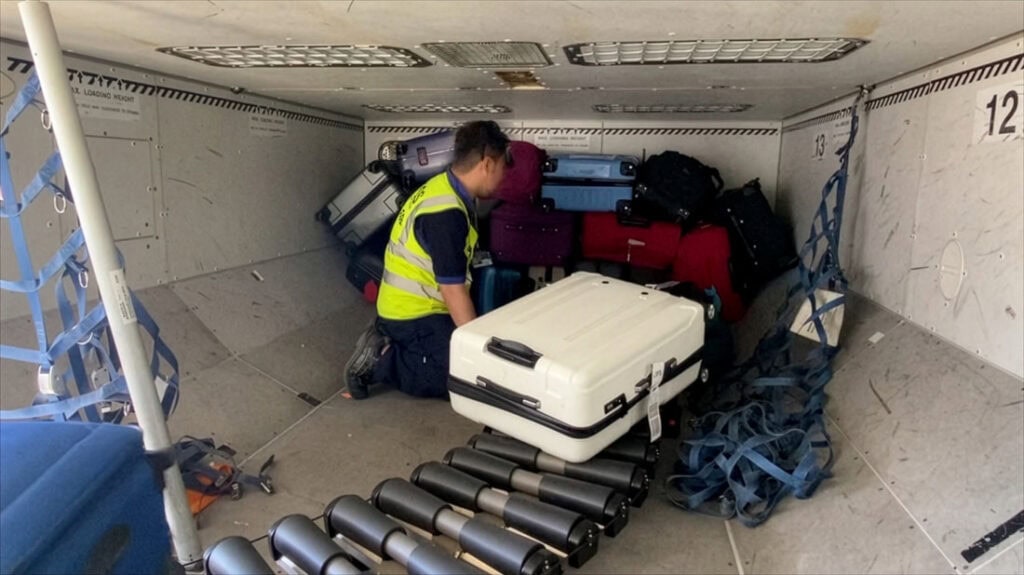
Manual baggage handling inside narrow-body aircraft holds has long posed significant ergonomic challenges for ramp staff. Limited height, tight access and high baggage volumes combine to create a physically demanding work environment.
Mark explains: “The biggest challenge and risk is still working in those confined spaces from a bulk loading perspective and manually handling baggage which can lead to injuries. For example, if an employee tweaks their back, it can quickly turn into a legal claim. Therefore, we are actively trying to reduce those risks and implement solutions such as the Rollertrack system which really helps us to enhance the working environment for the people.”
GGS proactively manages these risks through regular training and ergonomic assessments.
He adds that expectations have evolved as more solutions become available:
“In the past, there weren’t many options to improve manual handling in narrow-body bulk holds, so people just managed however they could. Now, with systems like yours on the market, there’s a higher expectation that employers will invest in protecting staff from these injury risks.”
Since rolling out the Rollertrack system, particularly after modifying the floors on the A320 and A321 aircraft, GGS has seen a significant reduction in personal injuries, further demonstrating the value of introducing semi-automated technologies.
Employee engagement and culture shift
According to Mark, the path to adoption wasn’t entirely smooth at first.
“Ultimately, I think we went on a bit of a journey with this,” Mark reflects.
“From the start, I thought it was a great idea. I’d had experience with the equipment before. What’s interesting is that we saw two very different cultures. For example, when the system was first introduced in Copenhagen back in the day, it was very much driven by the staff. They wanted it, they were engaged with it, and they really took ownership. Here, there was a lot more scepticism at first. People were unsure, they worried it would be too complicated or too hard to use. Some of that scepticism came from previous experience with other manufacturers´ solutions that hadn’t worked well or in some cases had actually made their jobs harder.”
Therefore, GGS took a phased approach to rolling out Rollertracks, giving staff time to train on the system and experience its benefits in practice. As confidence grew, attitudes shifted dramatically:
“As people started using the system and saw that it genuinely made their work easier, they began to embrace it,” Mark says. “We went from units sitting unused in the yard because handlers didn’t want to try them, thinking they were too complicated, to a situation where they’re actually complaining if they don’t have one or even refusing to go out on jobs unless a Power Stow unit is available.” Mark laughs.
This shift illustrates the success of GGS’s change management strategy in fostering employee buy-in.
He adds: “That’s probably the best measure of how valuable the equipment has become. We don’t necessarily get lots of direct feedback or comments about it, but the fact that people now insist on having it speaks for itself.”
Labour market pressures
The introduction of the Rollertrack system has also helped GGS navigate a tightening labour market. Finding and retaining qualified staff has become more challenging year after year with significant wage growth and higher staff turnover across the industry.
“Since COVID, we’ve seen double figure increases in salaries for the past three years,” Mark notes. “Unemployment is very low right now so people have options, and we are definitely seeing some even moving out of the industry. It’s a real struggle not just to find competent workers, but also to retain them because the labour market is so aggressive. If we can improve working conditions, reduce injuries, and make the job easier, it helps us retain employees.”
Towards leaner, safer operations
The Rollertracks have really helped GGS streamline its resourcing. By reducing manual handling demands and semi automating the movement of baggage into the hold, ramp teams can work with fewer people while delivering a safe, high-quality service.
“We don’t necessarily see huge time savings per turnaround,” Mark explains, “but we do see a reduction of manual handling and roughly one head per turn, which is significant. The bags are also handled more carefully, reducing damage and improving the passenger experience.”
Typically, where a four-person team would have been needed in the past, GGS can now manage with three, freeing up resources for other key tasks during the turnaround process.
Proven reliability
GGS has found the Power Stow Rollertrack robust and reliable in daily operations.
Mark explains: “On the reliability side, it’s been good. We’ve got a really good relationship with TCR who look after the maintenance and I know they have a good relationship with Power Stow as well. We haven’t seen any major issues. There was definitely some nervousness at the start, even from my side, because the more complicated you make something, the more elements there are, the more that can break. But actually, we haven’t seen problems. It’s been quite robust and we’re happy with the units.”
He adds that there were a few adjustments needed:
“We had to do some modifications to the handrails because of fall from height risks, but everyone engaged really well on that and we were able to get those fixes in place relatively quickly.”
Electrification ambitions
GGS currently operates a combination of diesel and electric GSE, reflecting today’s realities of infrastructure capacity at Gatwick.
“We’d like to move to a fully electric fleet long term,” Mark confirms, “but the charging infrastructure just isn’t there yet. The airport authority is committed to improving it by 2030. So for now, we’re operating a hybrid approach using both diesel and electric units.”
GGS is actively collaborating with the airport authority and exploring interim solutions to support its electrification goals. This strategy balances short-term practicalities with GGS’s long-term sustainability targets.
Exploring automation
GGS is actively exploring opportunities to bring more automation into its ground handling processes.
“We ran a trial of a fully autonomous vehicle in partnership with Aurrigo and IAG as part of their development programme,” Mark explains. “There were definitely some challenges especially around infrastructure gaps which limited the results somewhat. We’re also planning a trial for the Power Stow Tail Loader, which is another innovative solution from Power Stow that we’re going to explore.” All automation trials are conducted under strict governance protocols, including data privacy safeguards and employee consultation.
Beyond these trials, GGS is looking at a wide range of potential automation projects including autonomous passenger boarding bridges, automated FOD checks, and automated SEGs to name a few.
“Anything that helps improve the customer experience while enhancing our operations is worth investigating,” Mark adds. “We’re continuously looking at automation projects to see how we can further improve our processes, enhance the customer experience and reduce manpower requirements.”
Power Stow, 3 November 2025
About Power Stow
Power Stow is specialized in designing and manufacturing innovative baggage and cargo handling system solutions for airports, airlines, and ground handlers.
Through dedicated focus on quality, innovation and continuous improvements Power Stow has become the global market leader in the extendable belt loader technology. The Rollertrack Conveyor is a unique belt loader extension that provides enhanced working conditions for ramp agents inside the aircraft hold, whilst improving productivity and reducing baggage handling times.
Power Stow is dedicated to delivering solutions that contribute to more efficient and cost-effective baggage and cargo handling operations, as well as creating a better working environment at airports with equipment that reduces physical strain on baggage handling staff.
Power Stow´s products are designed to deliver highly reliable operations with low maintenance cost, resulting in a low total cost of ownership. Power Stow´s equipment works around the clock at over 200 airports in more than 40 countries.
Press contact, Power Stow:
Lilla Pozsonyi, Marketing Manager: lip@powerstow.com